Flame logo — full bleed
SVGVector source, scales to any size.
Everything you need to write about Watchfire, in one page. Drop the boilerplate into your article, download the logos, and check the facts.
Three lengths. Pick the one that fits the slot you have.
“Better context. Better code.”
For a tweet, a chip, or a headline.
“Better context. Better code. Watchfire turns clear specs into scoped tasks, then lets Claude Code, OpenAI Codex, opencode, Gemini CLI, GitHub Copilot CLI, or Cursor Agent build them in sandboxed git worktrees.”
For a deck slide or a meta description.
“Watchfire turns clear specs into scoped tasks, then hands each one to an agent in its own git worktree and sandbox. Better context in, better code out — with clean transcripts and full control at every step.”
For an article intro or a release-notes paragraph.
Drop this into the bottom of your article.
Watchfire is an open-source remote control for AI coding agents. It turns clear specs into scoped YAML tasks, then runs each one in a sandboxed git worktree with a coding agent of your choice — Claude Code, OpenAI Codex, opencode, Gemini CLI, GitHub Copilot CLI, or Cursor Agent. Watchfire ships as a daemon, a CLI/TUI, and a desktop GUI, running on macOS, Linux, and Windows. It is free and open source under Apache-2.0; users pay their own model API costs.
The flame on dark and light surfaces, plus banners and the default social card. Cross-reference the brand page for usage guidelines — don’t recolor the flame.
There is no separate wordmark file — the Watchfire wordmark is set in Syne and is rendered in context on /brand.
Vector source, scales to any size.

Compact mark — square crop.
Wide banner for dark layouts.
Wide banner for light layouts.

Square / app-store-style banner.
Default Open Graph card, 1200×630.
Watchfire.app surfaces, ready to drop into an article. Direct downloads — no bundling required.
Screenshots may be cropped and compressed for use in articles.
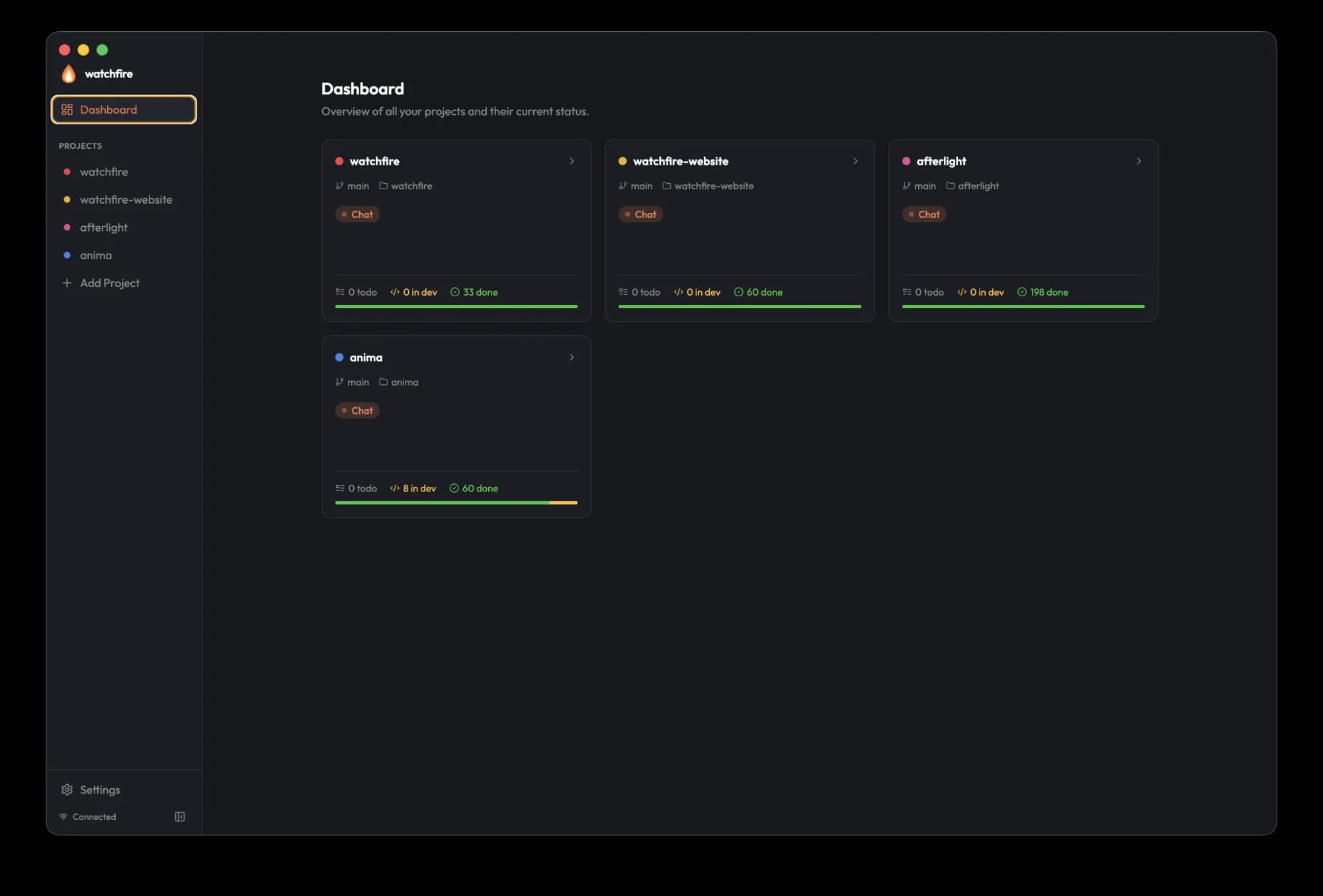
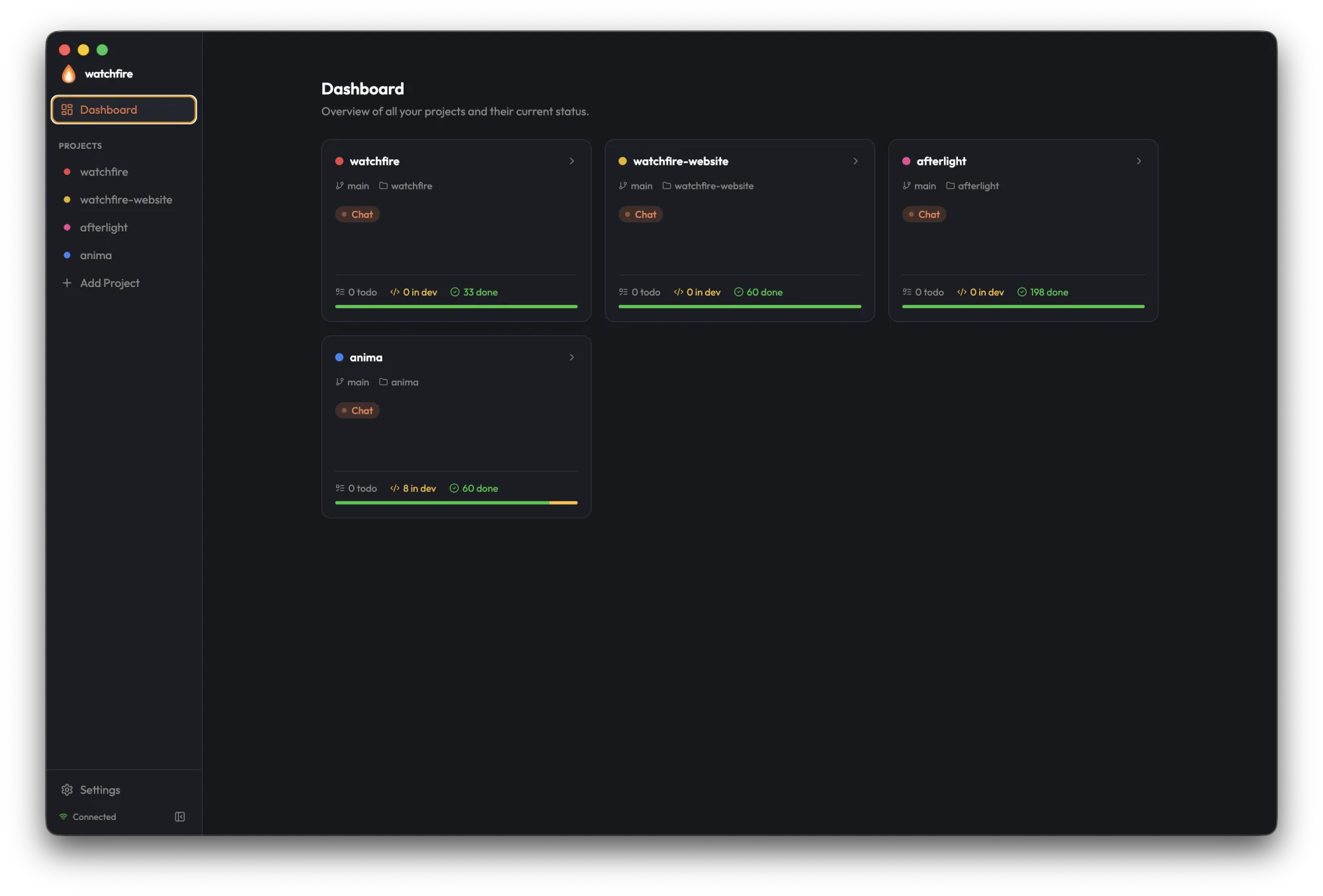
Multi-project dashboard with live task counts.
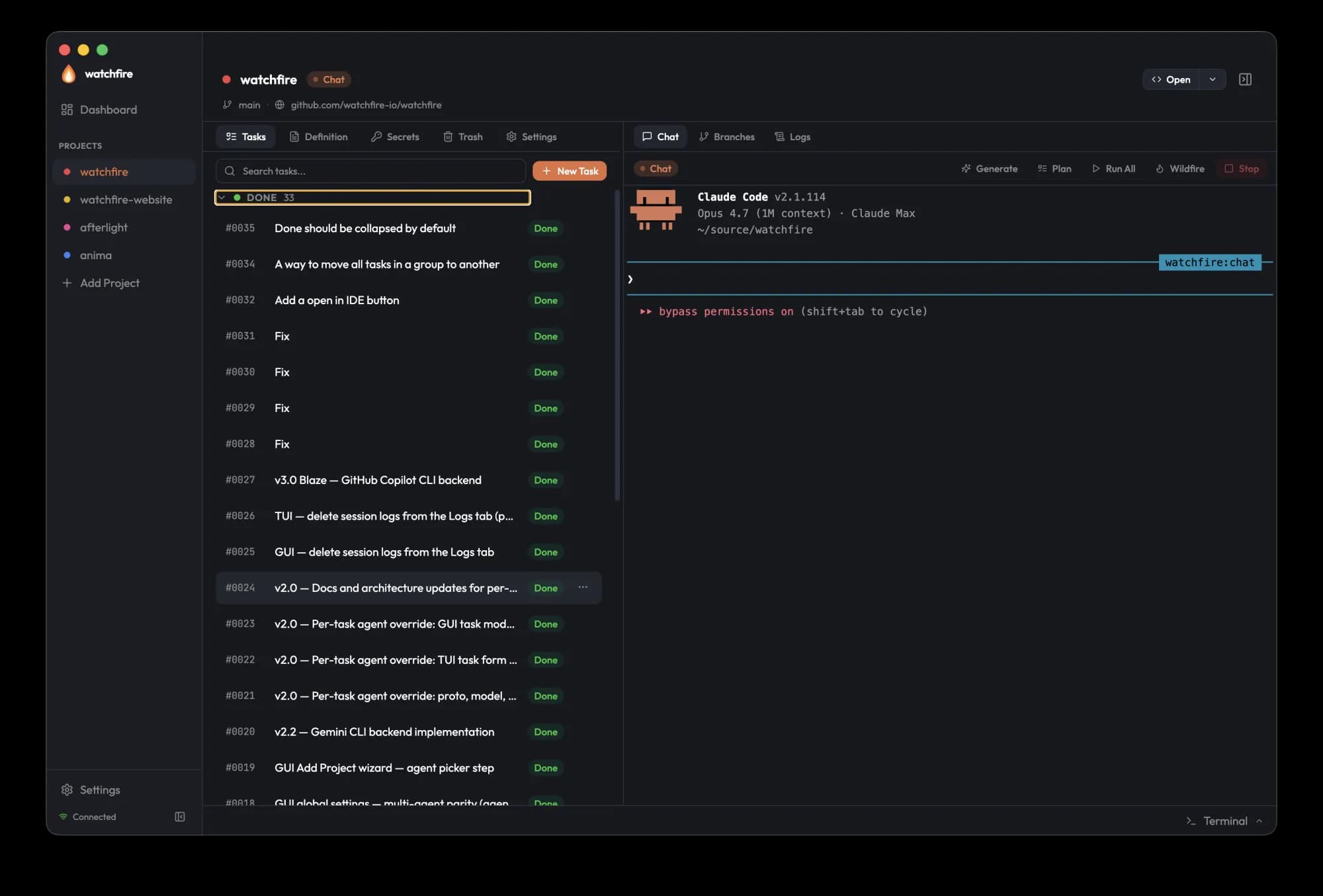
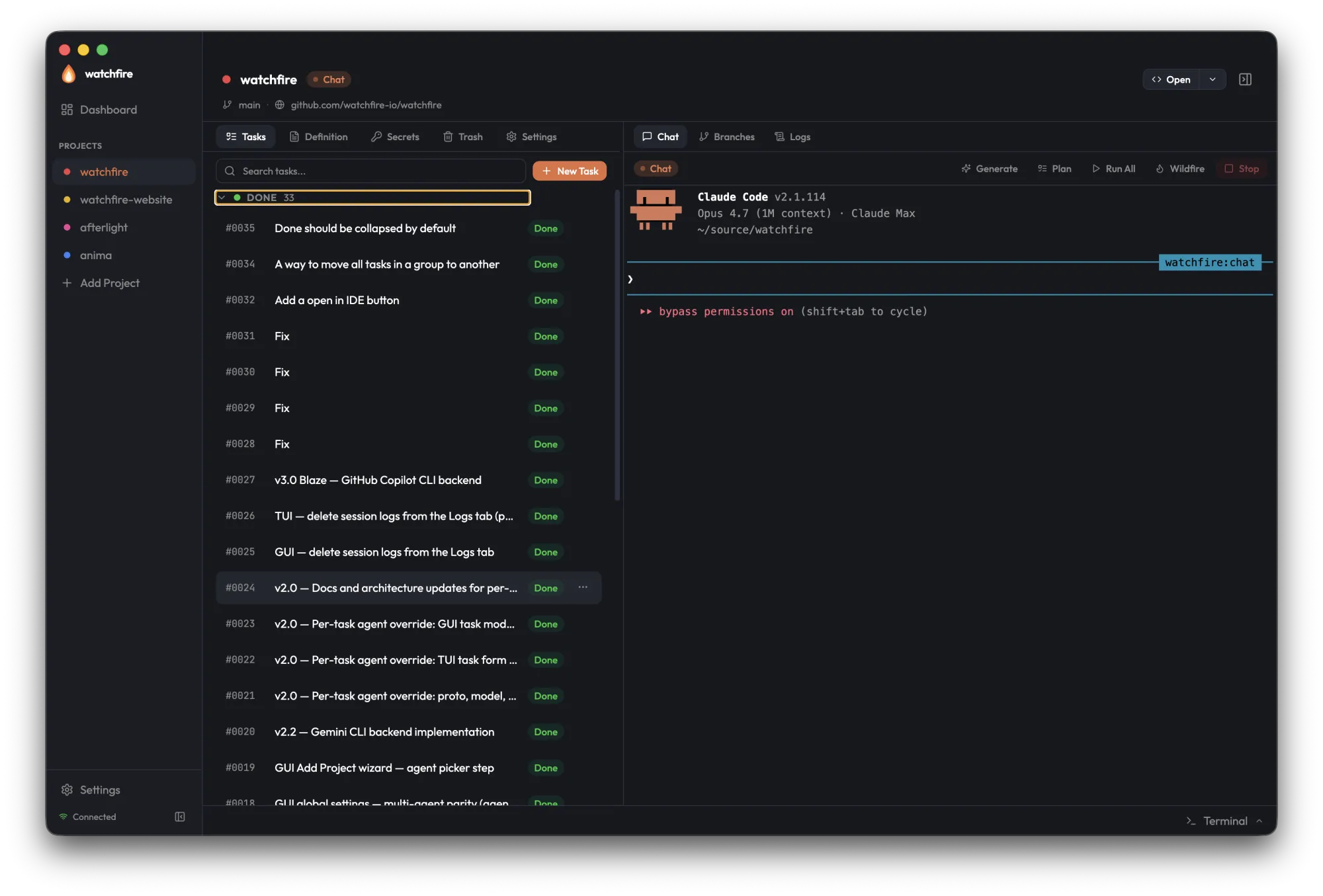
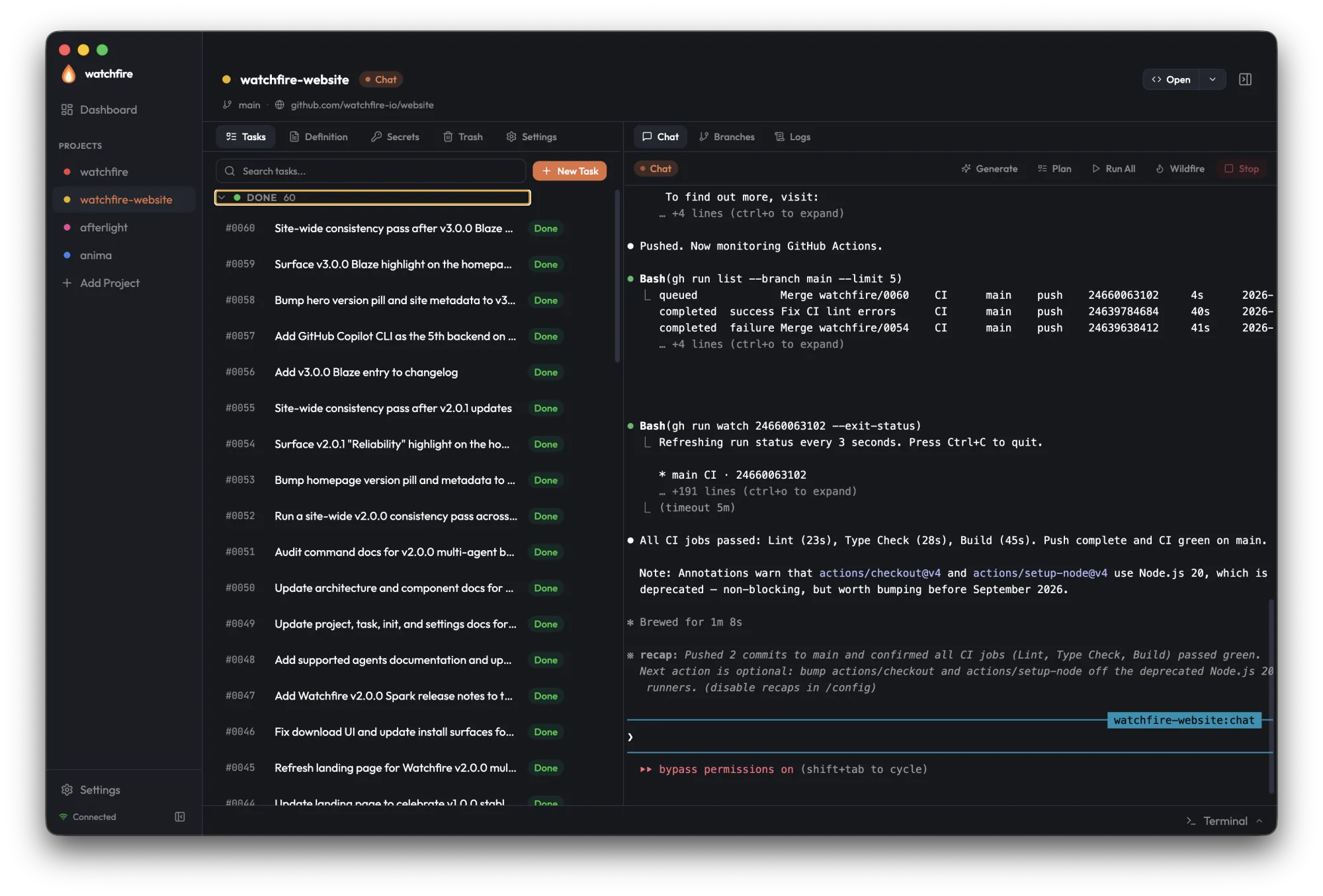
A project's task list with the live agent terminal alongside.
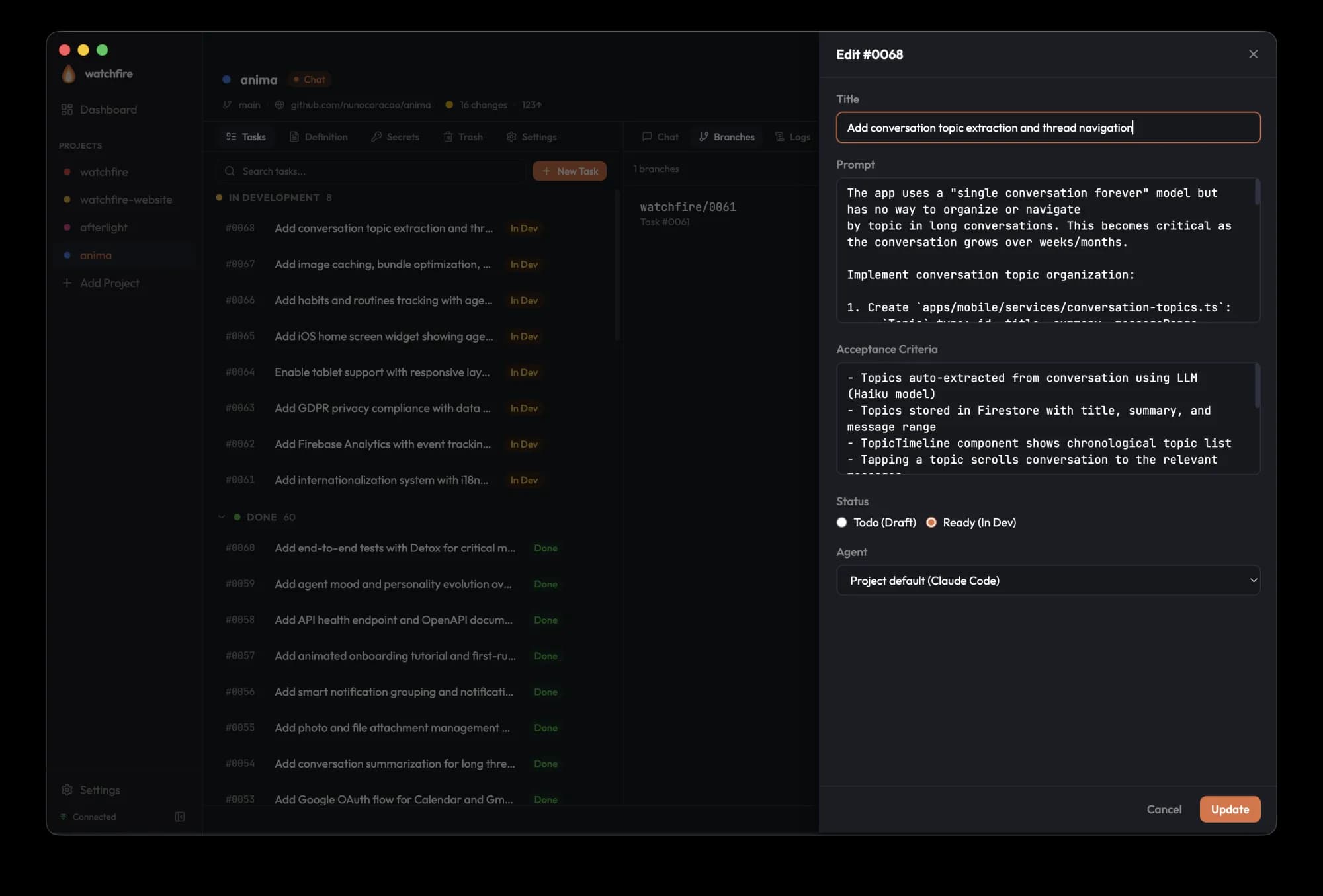
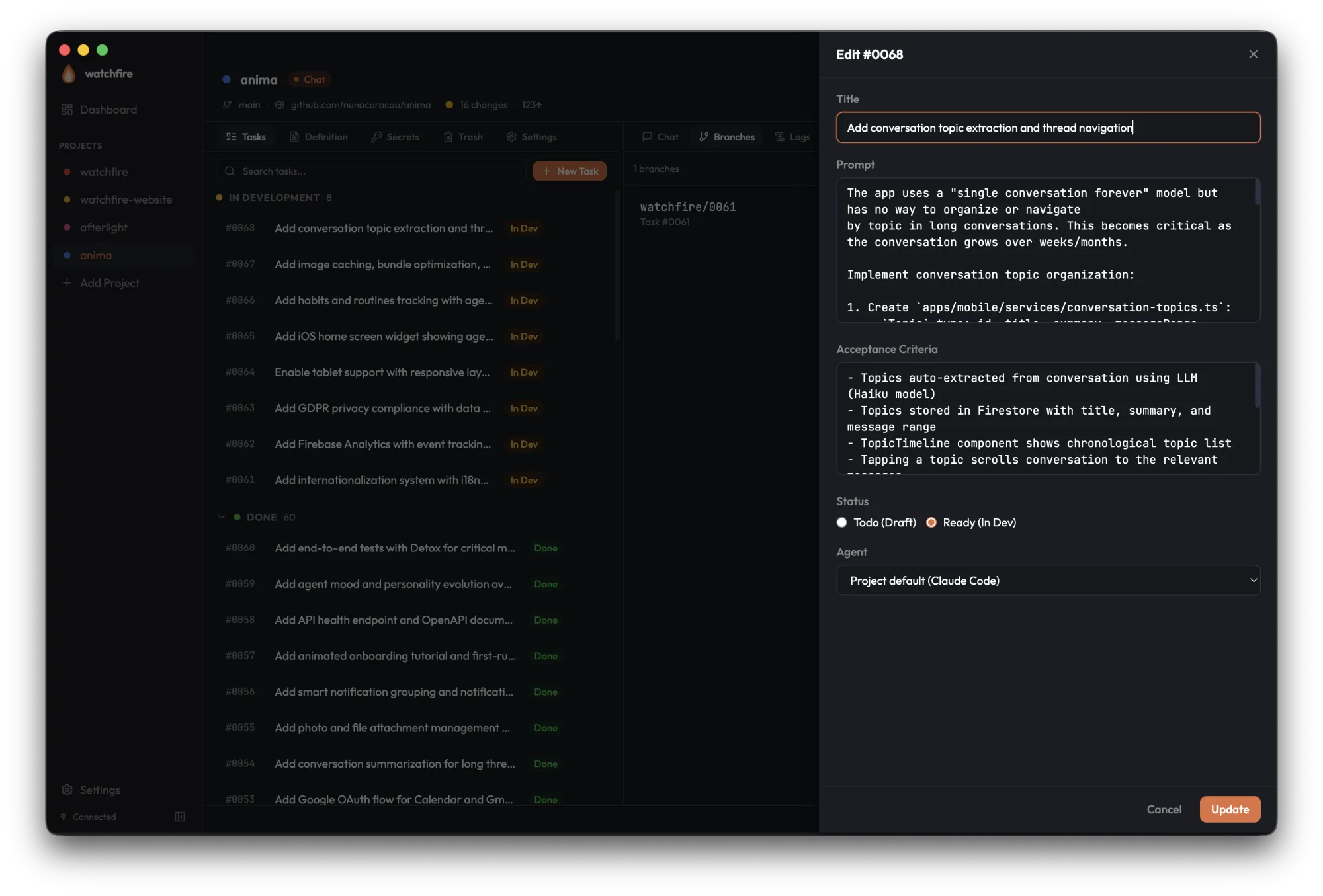
Editing a task's prompt and acceptance criteria.
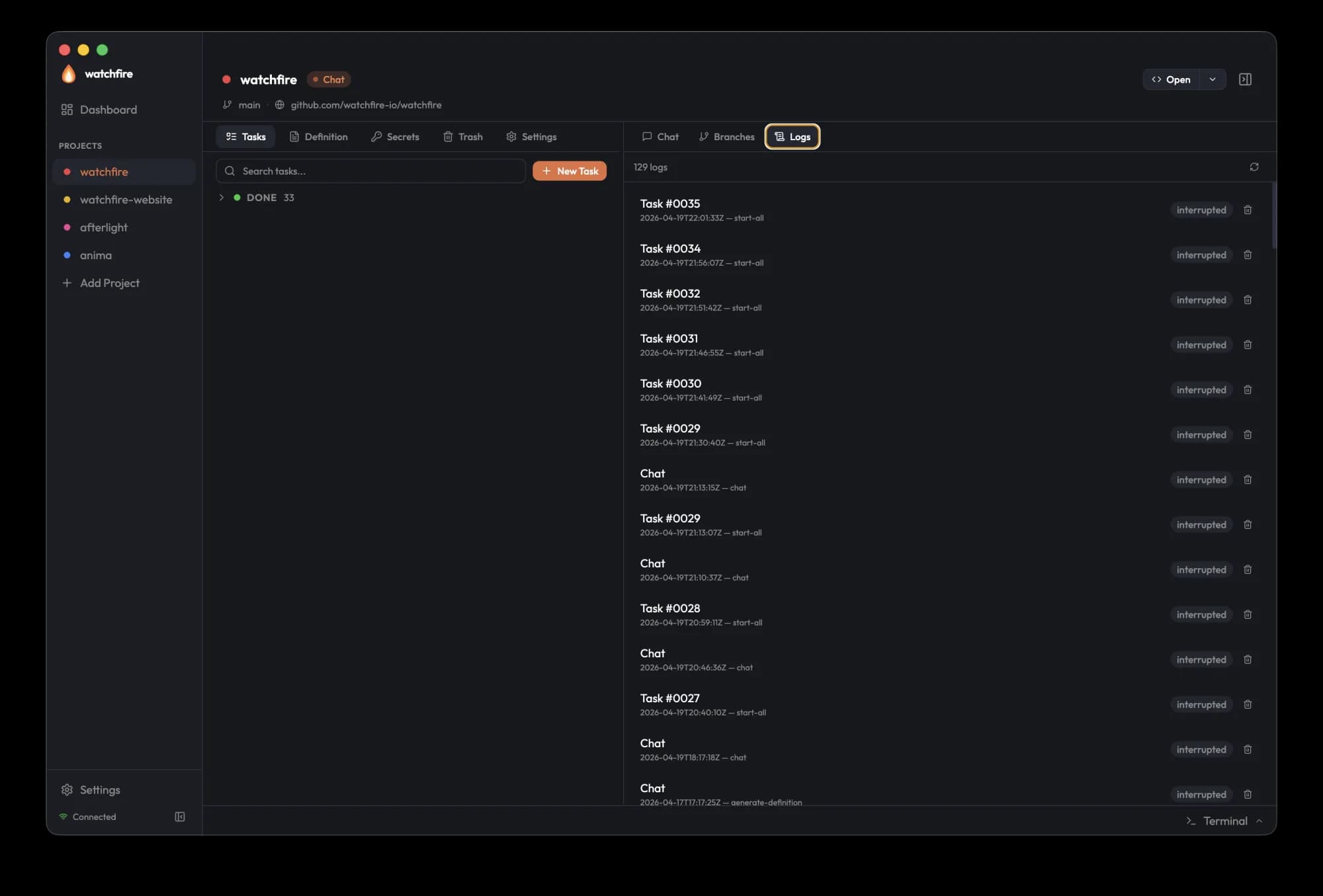
Streaming the live terminal output from a running agent.
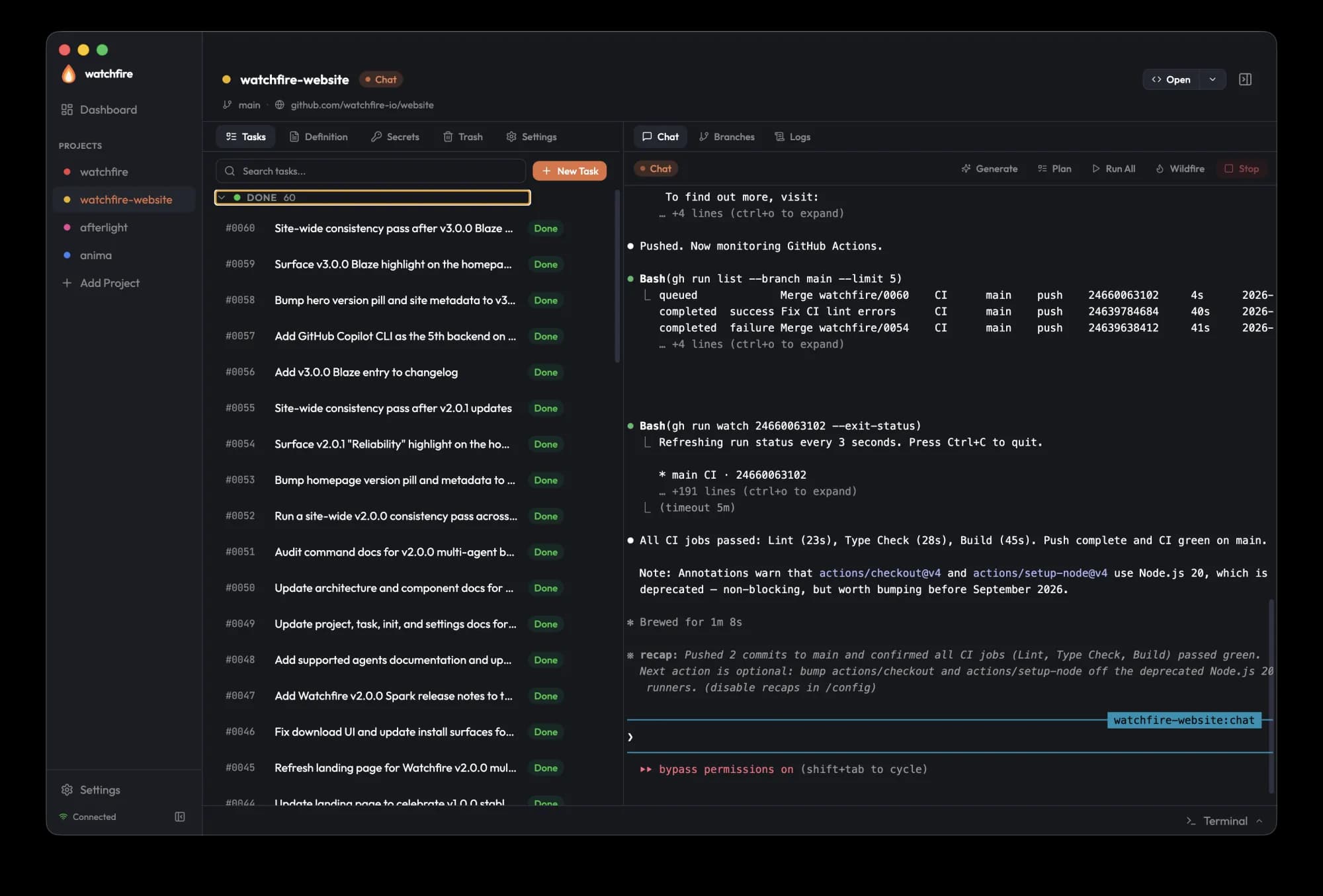
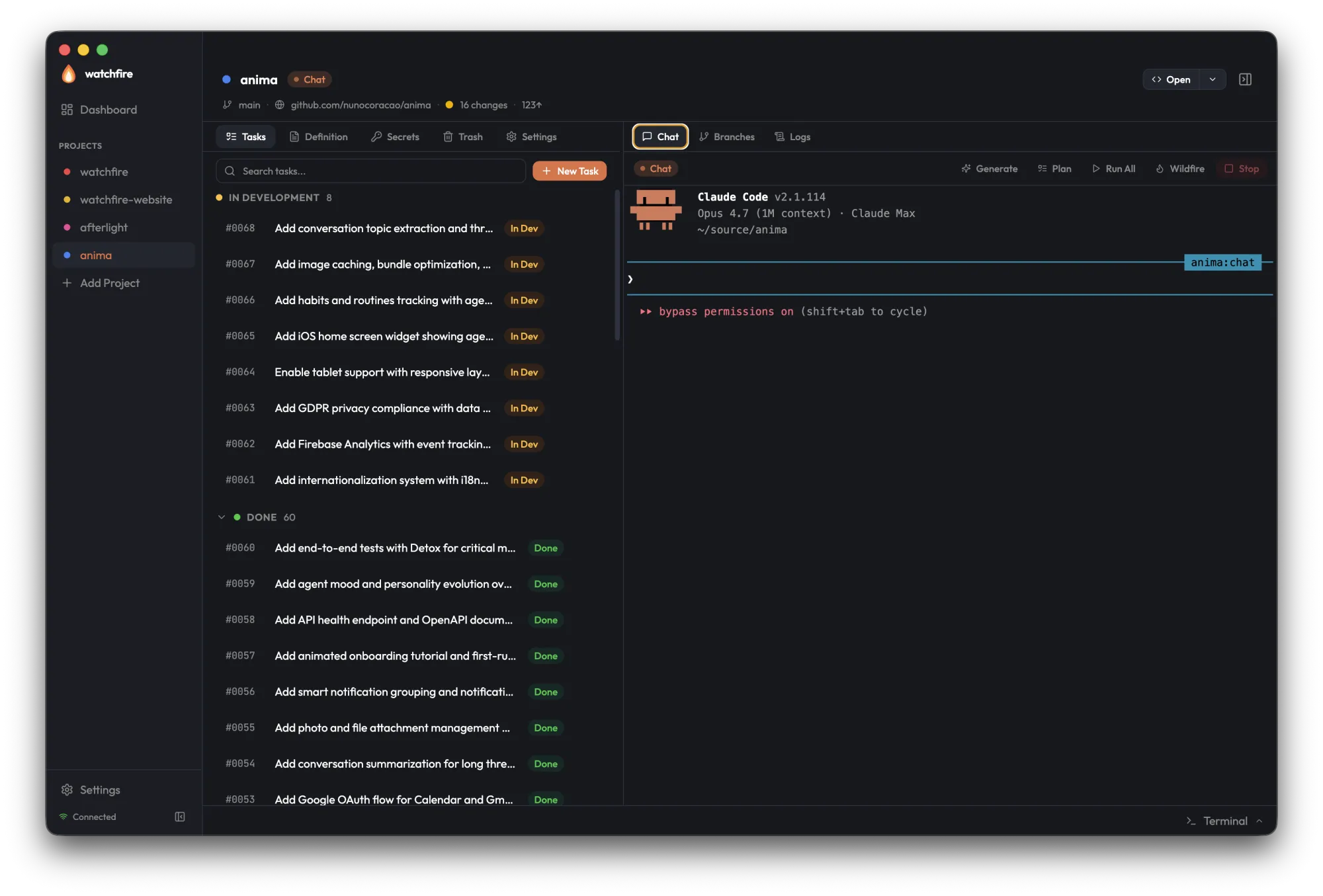
An active chat session with a coding agent.
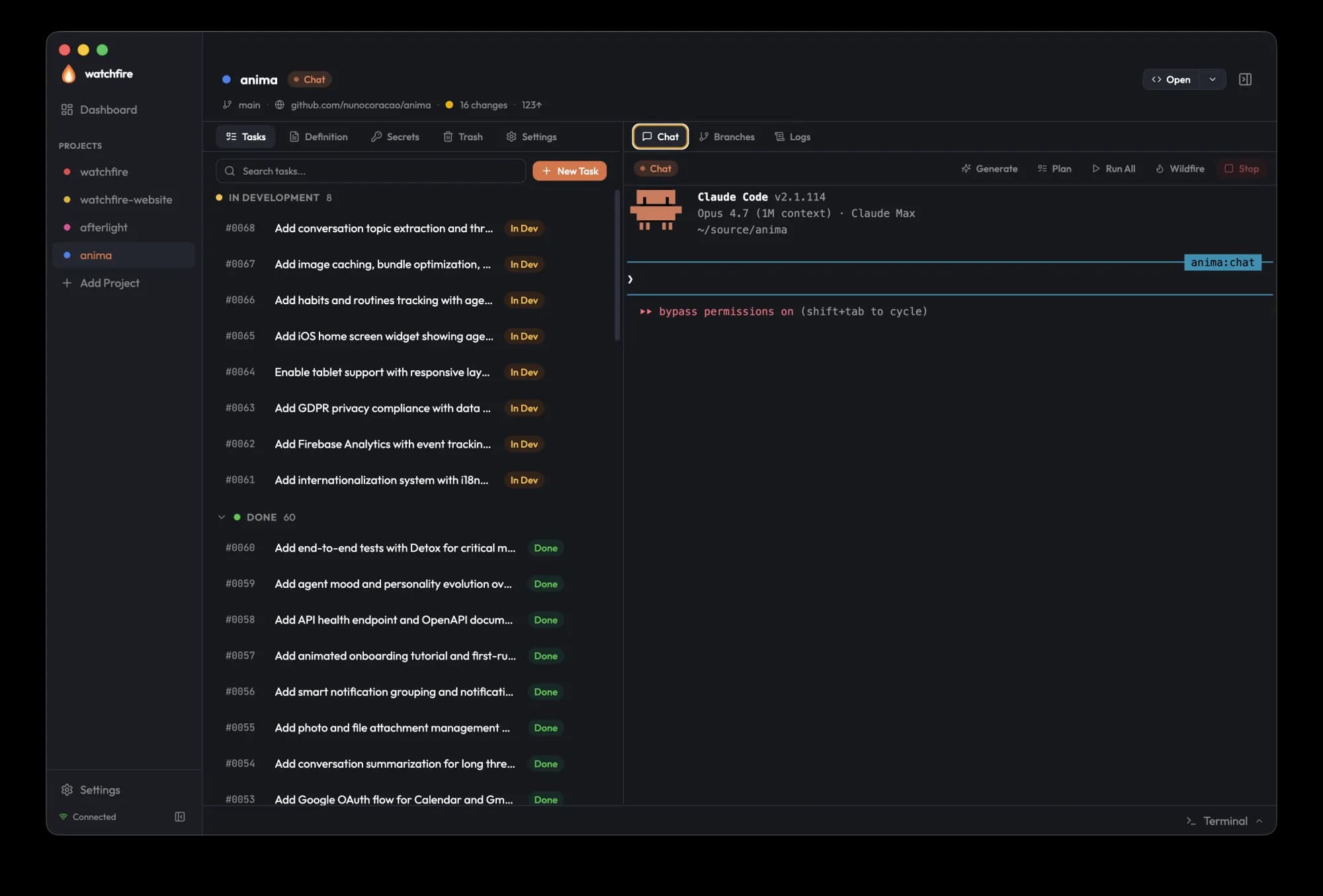
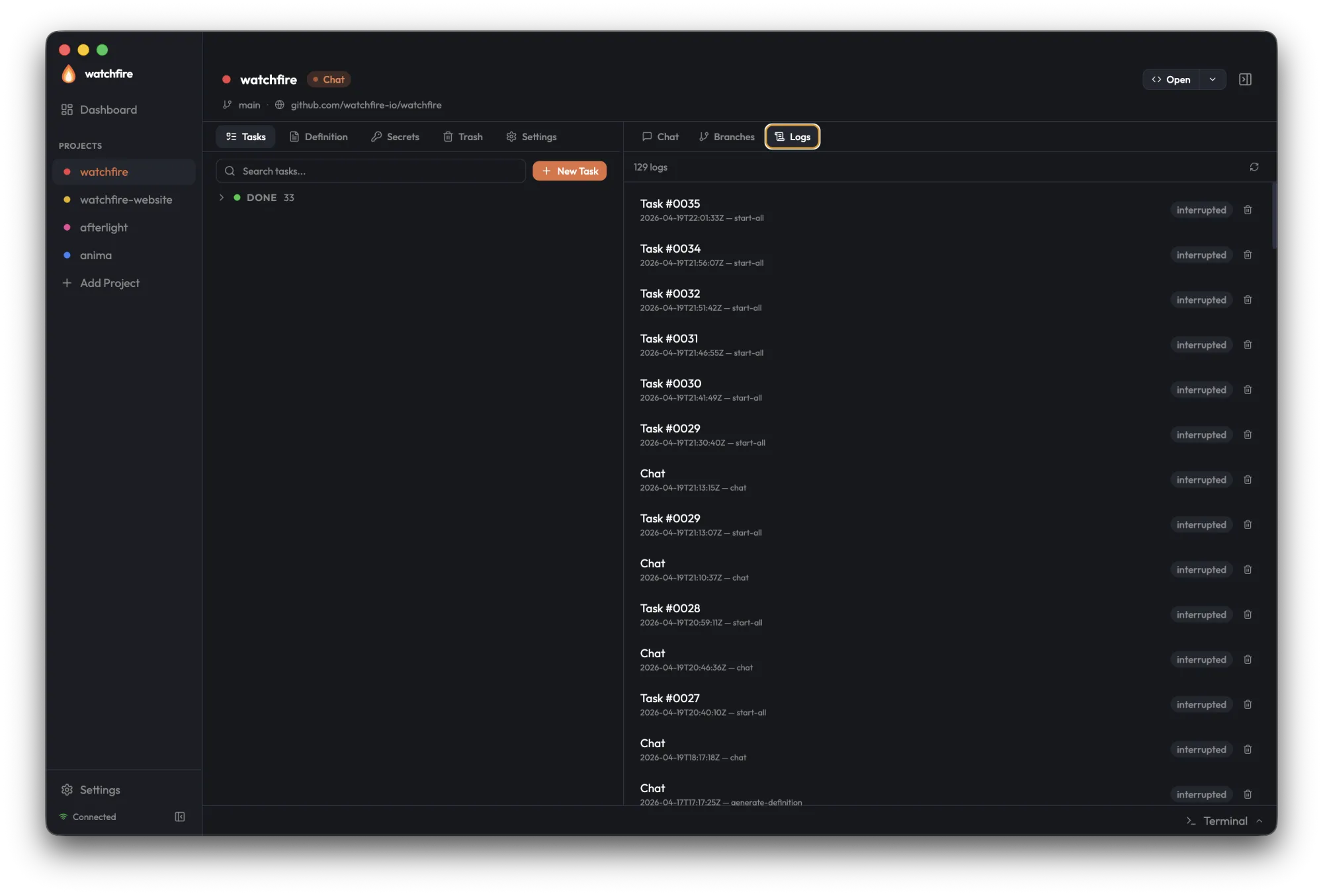
The full task list with status, age, and last run.
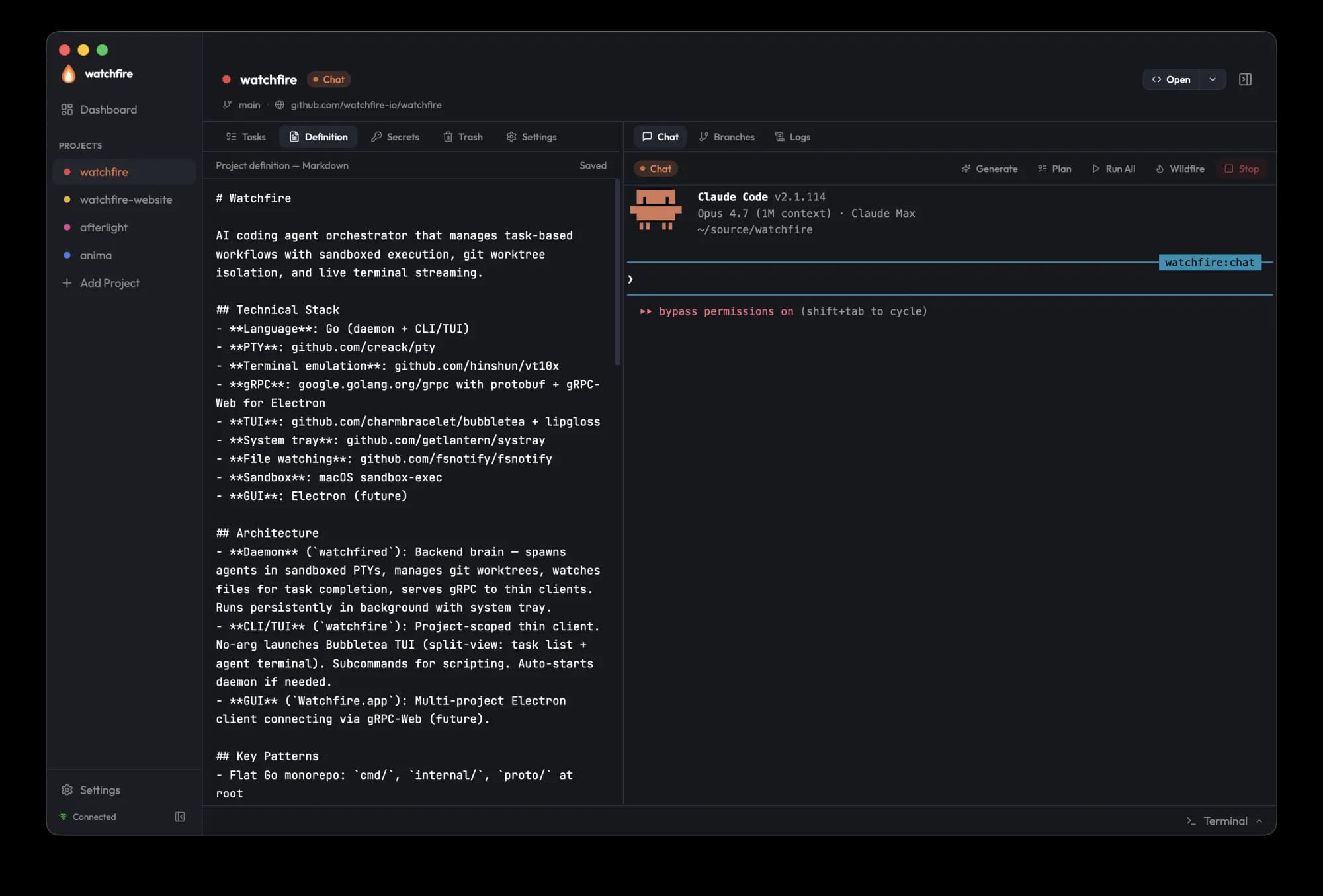
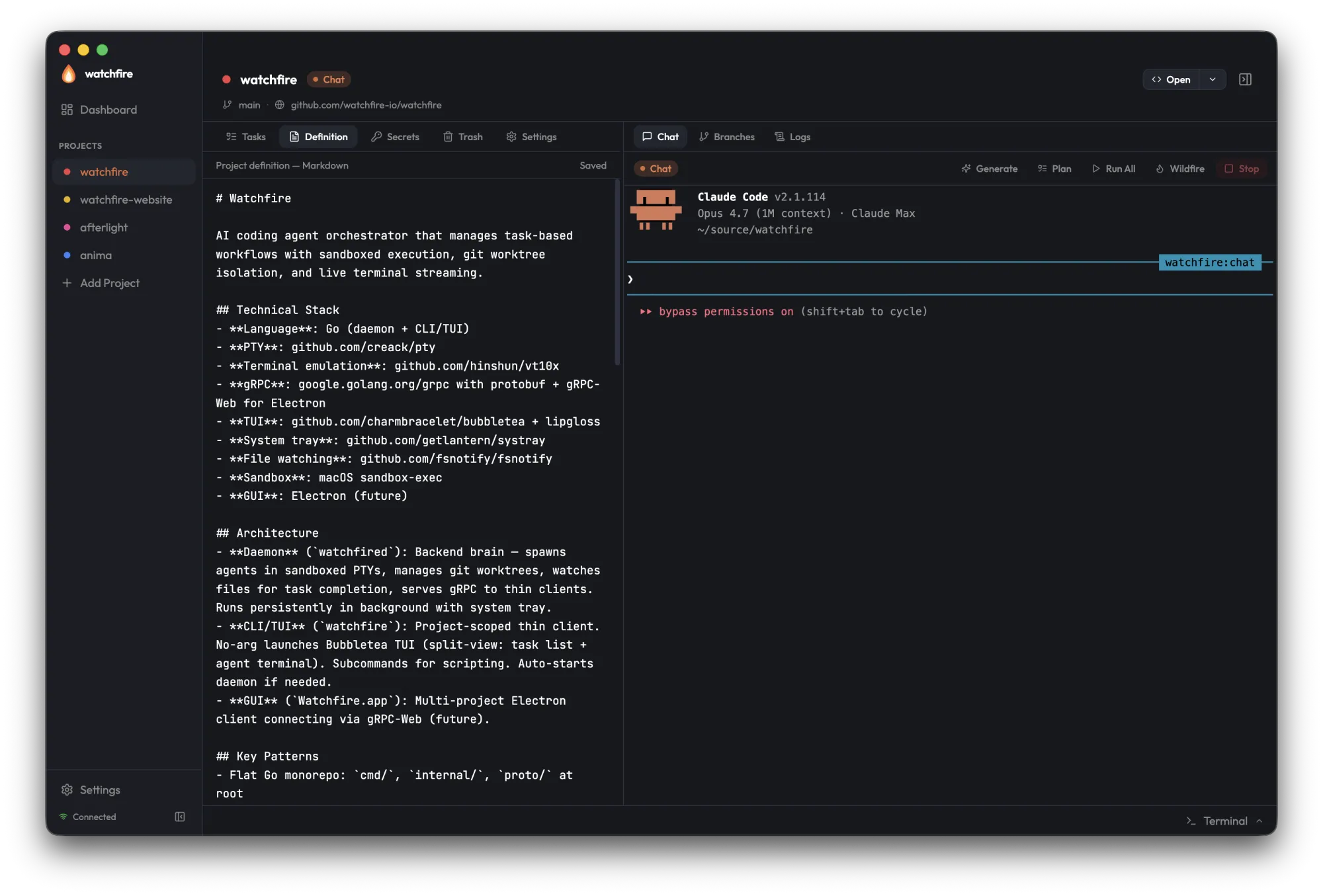
Editing the project definition — the prompt the agent reads first.
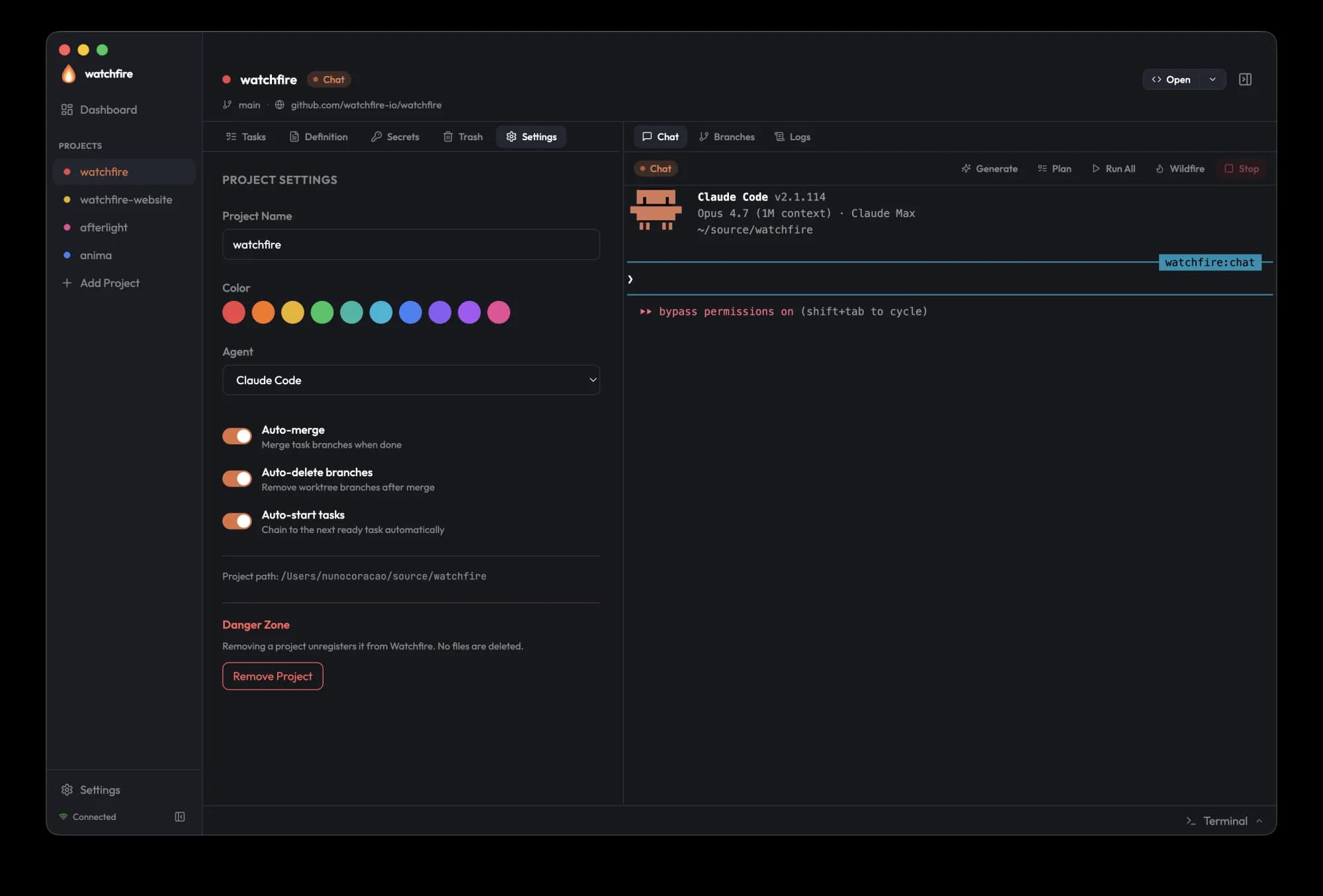
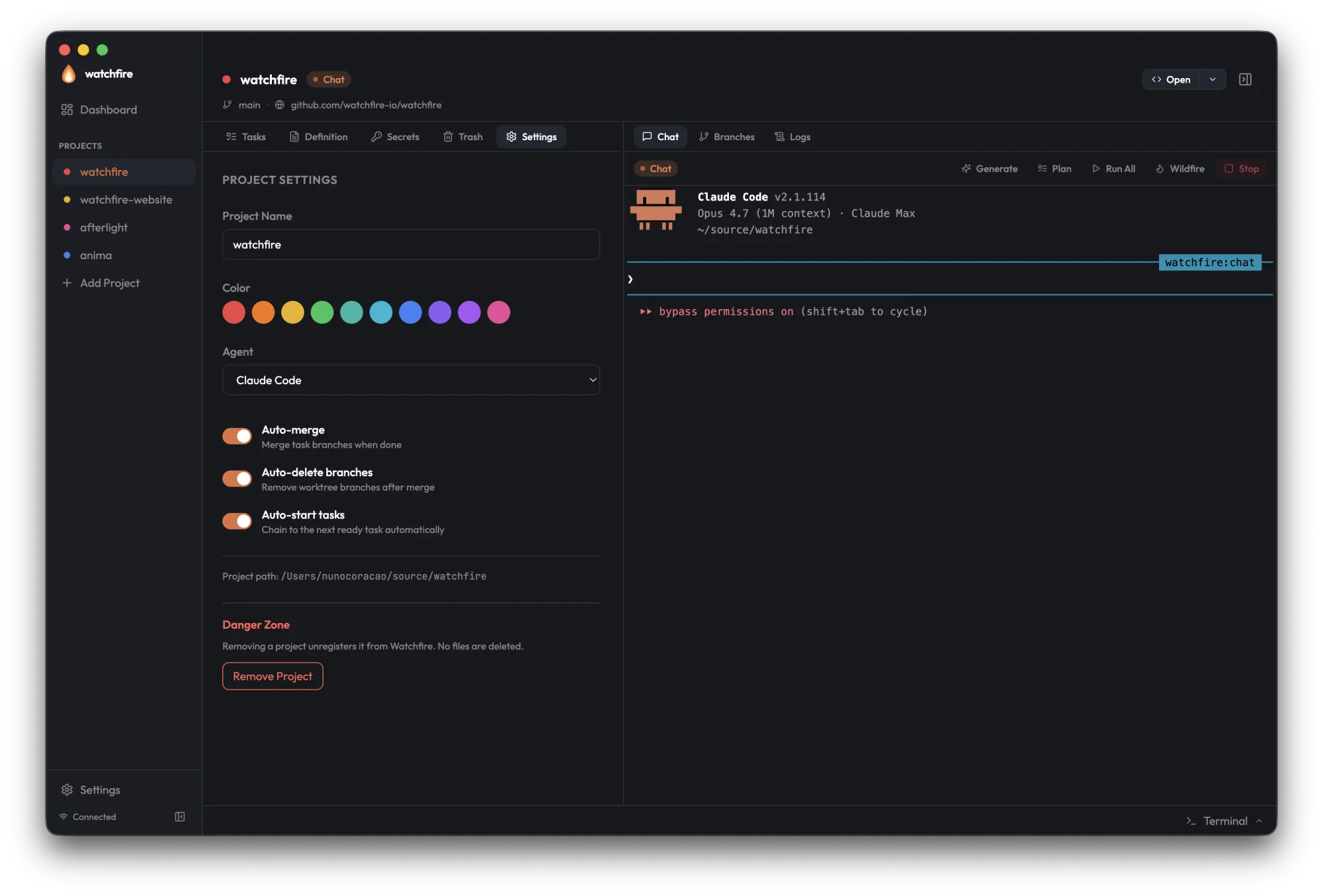
Project-level settings: default agent, auto-merge, sandbox.
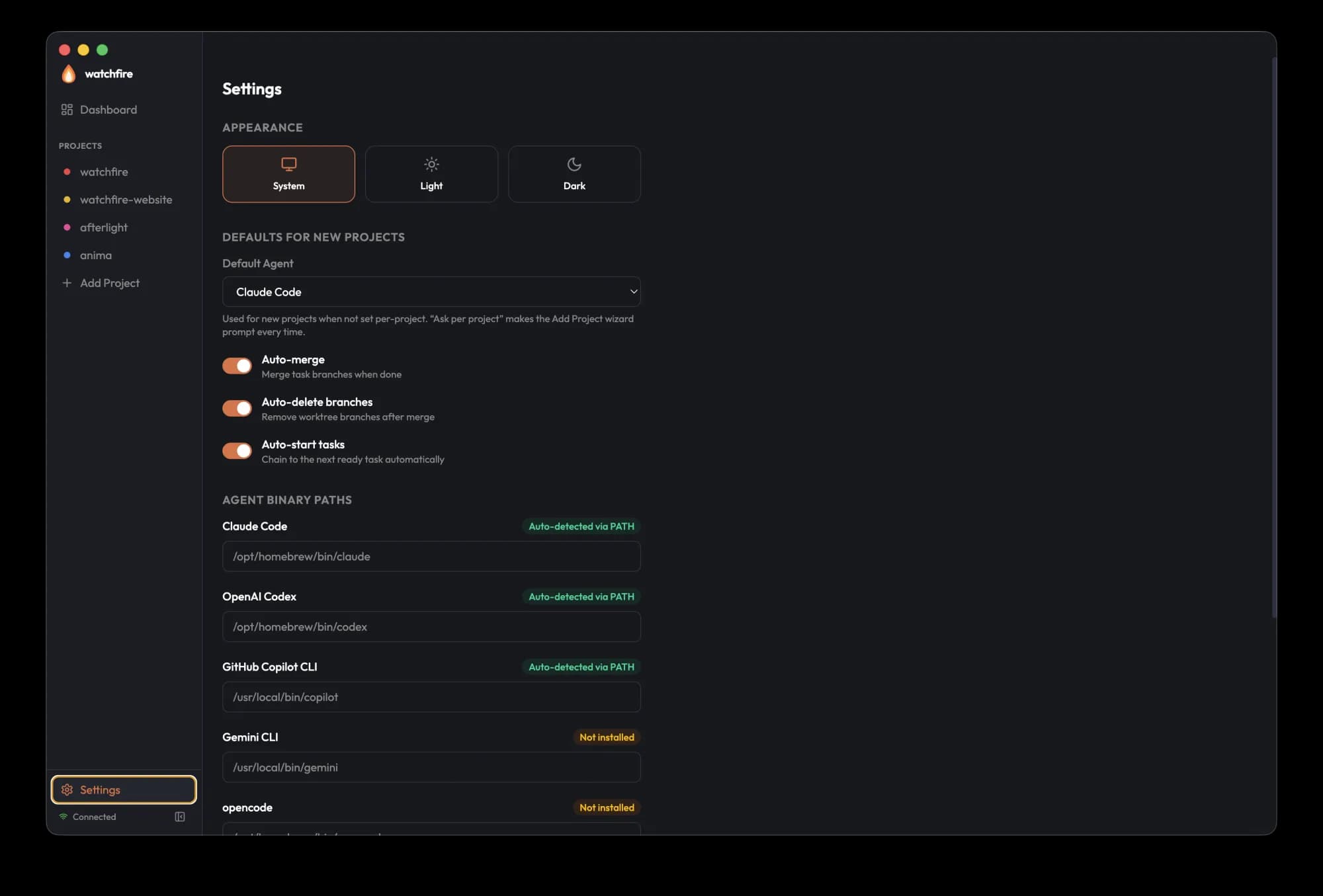
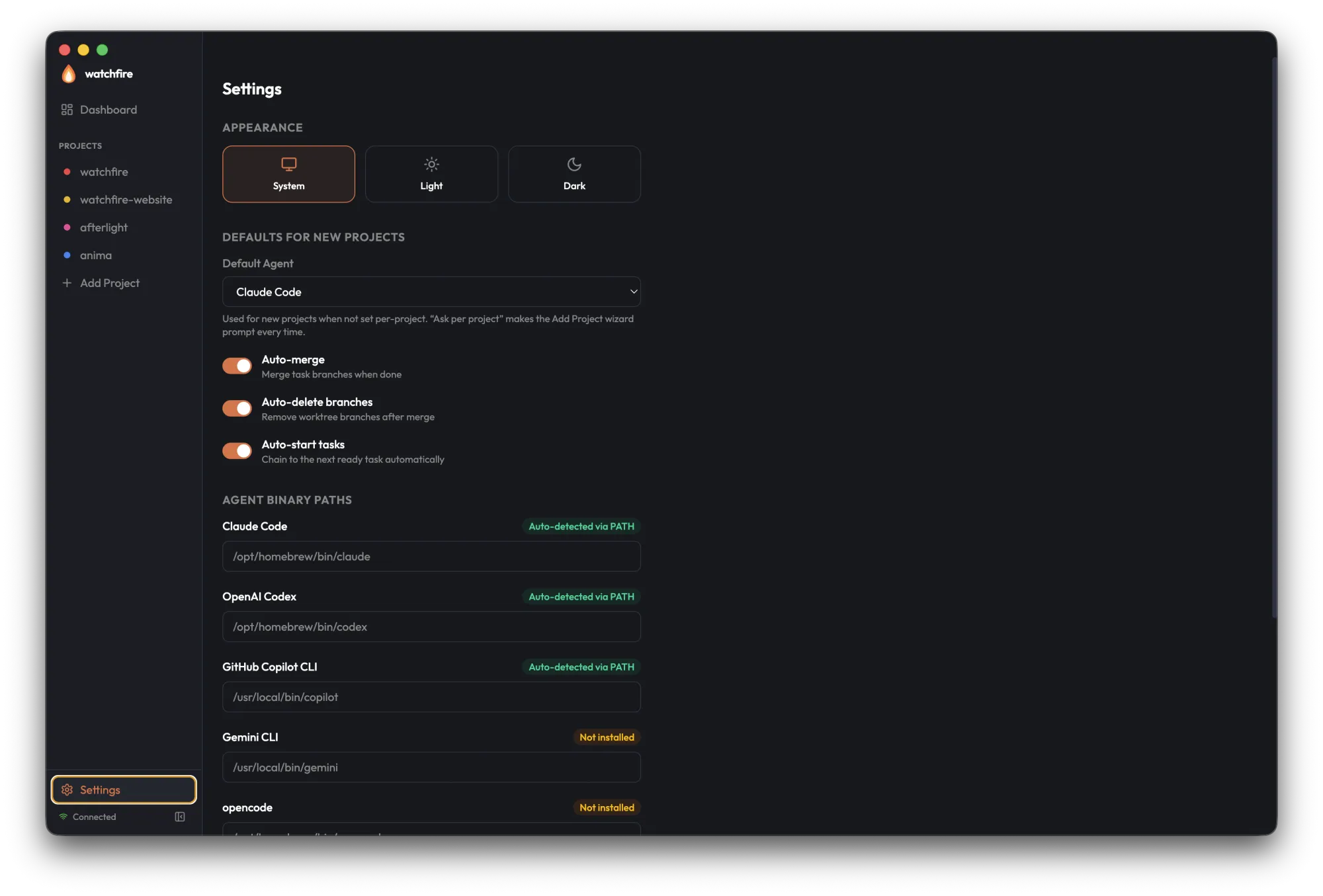
Daemon-wide settings shared across all projects.
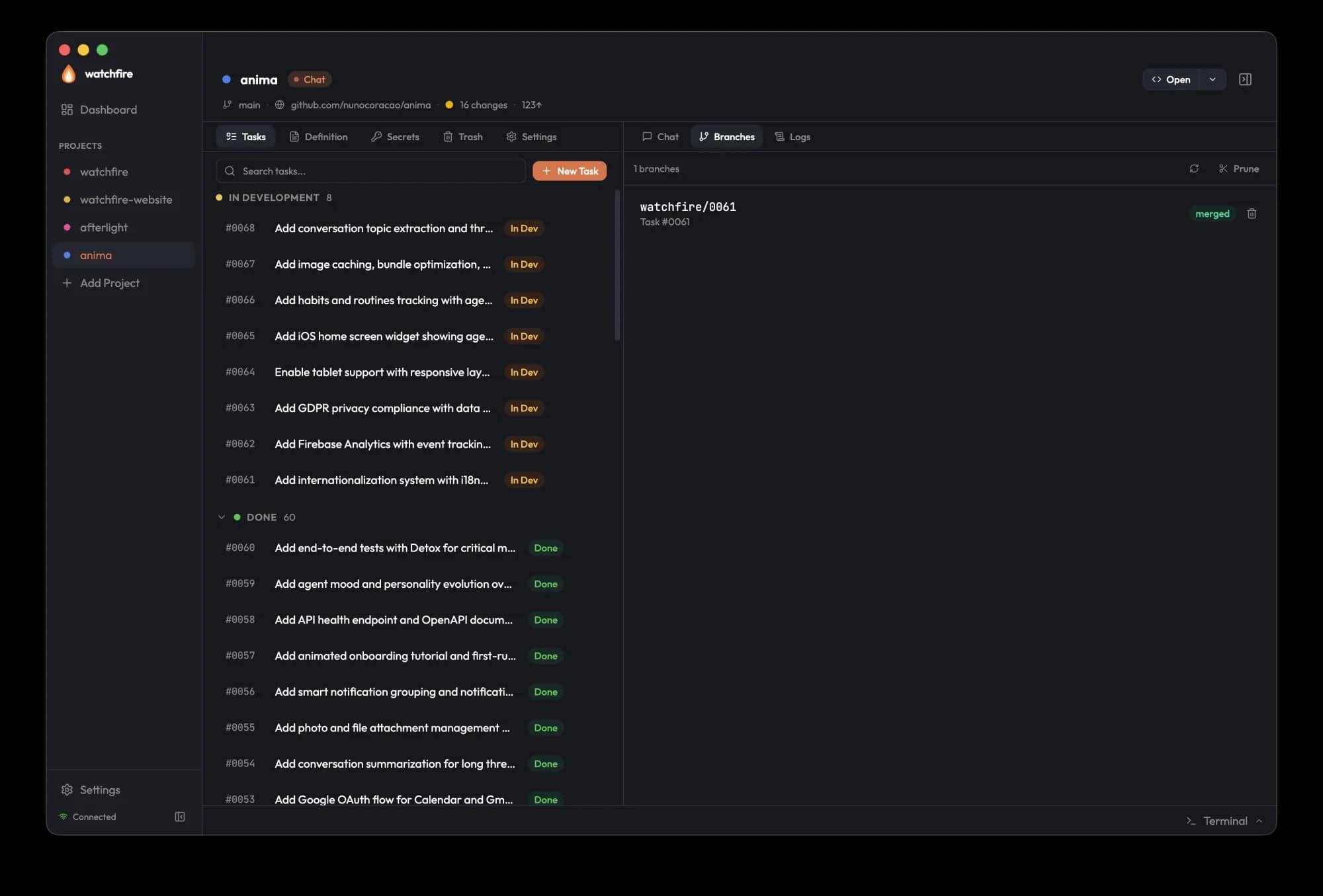
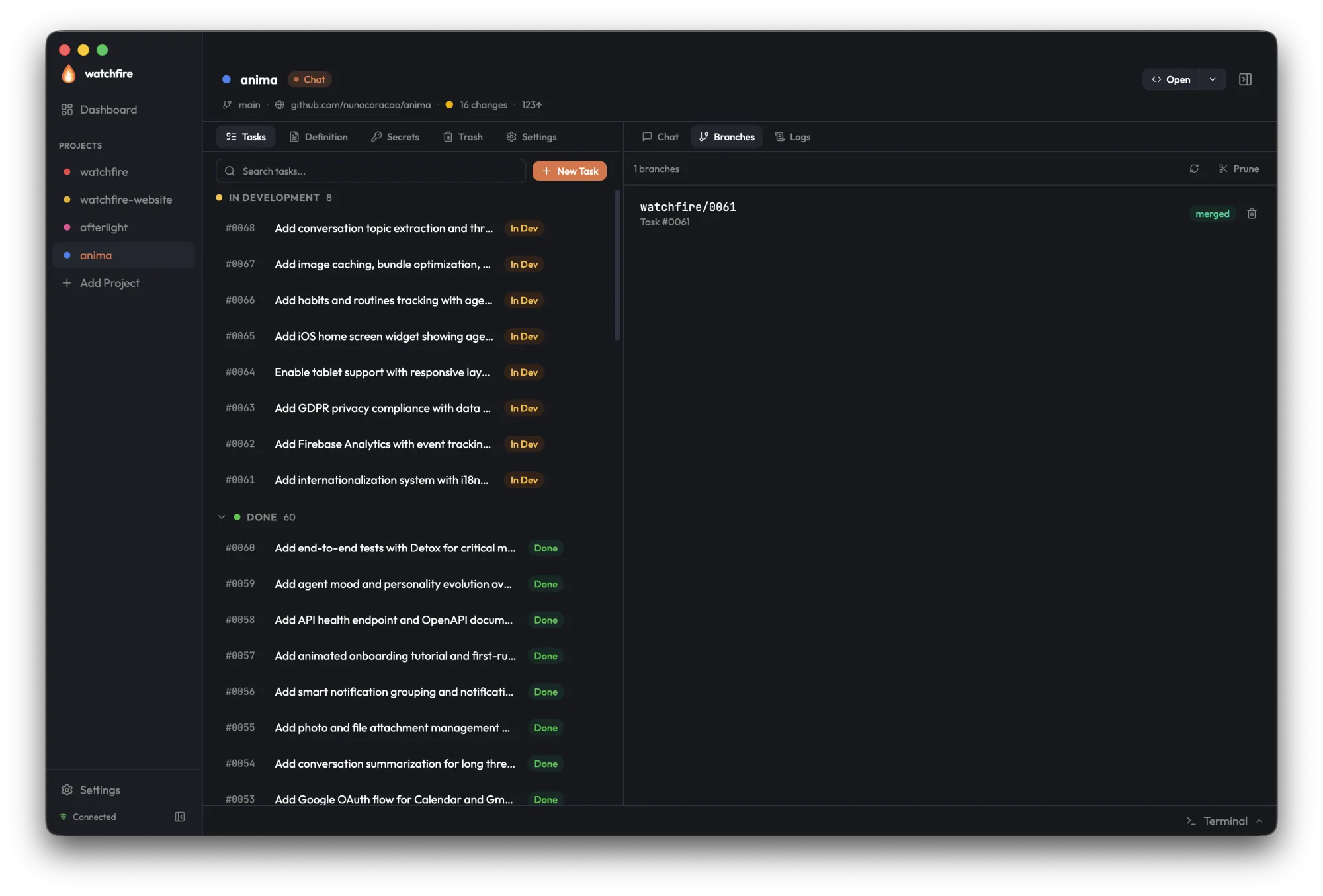
Per-task git worktrees, each on its own watchfire/NNNN branch.
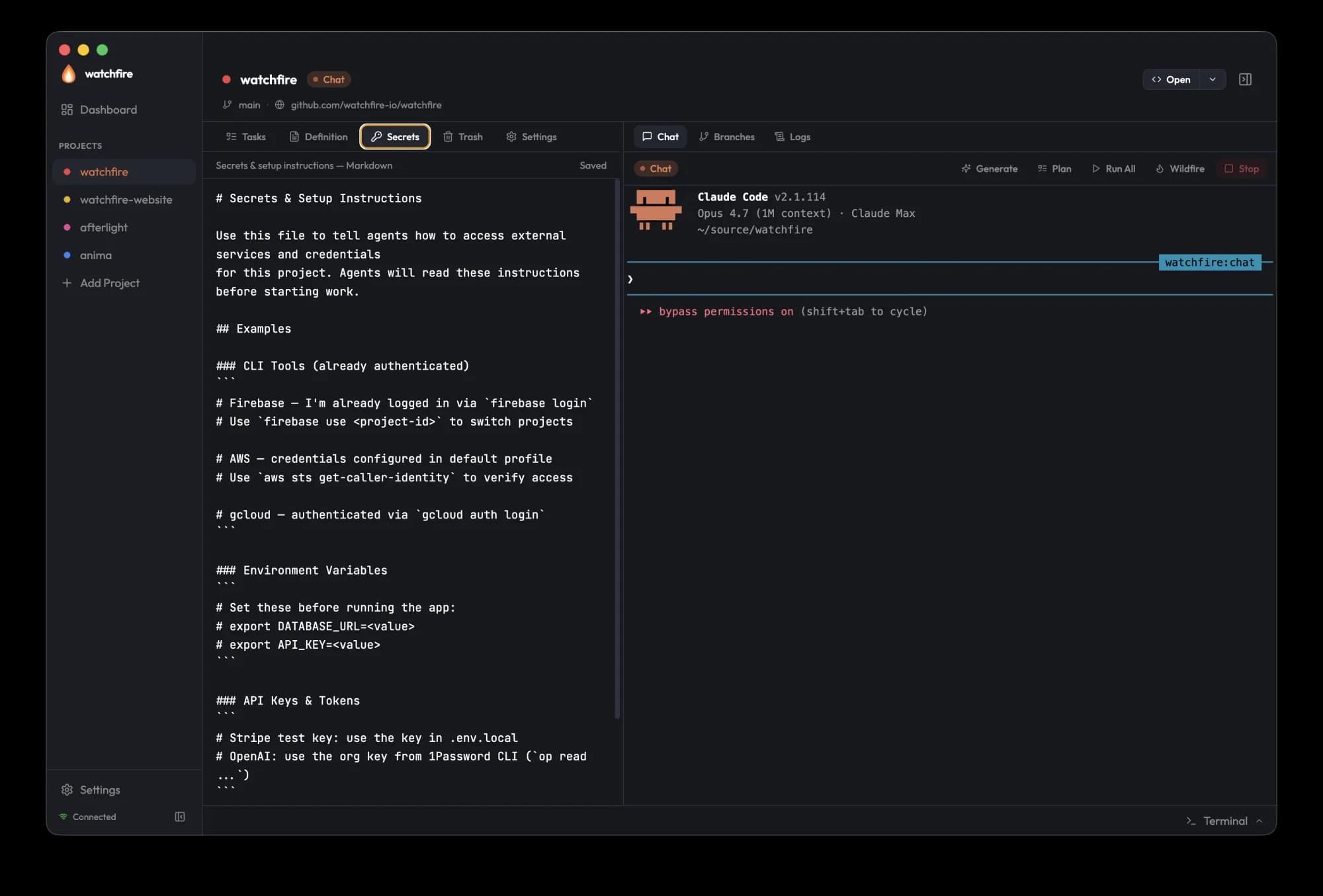
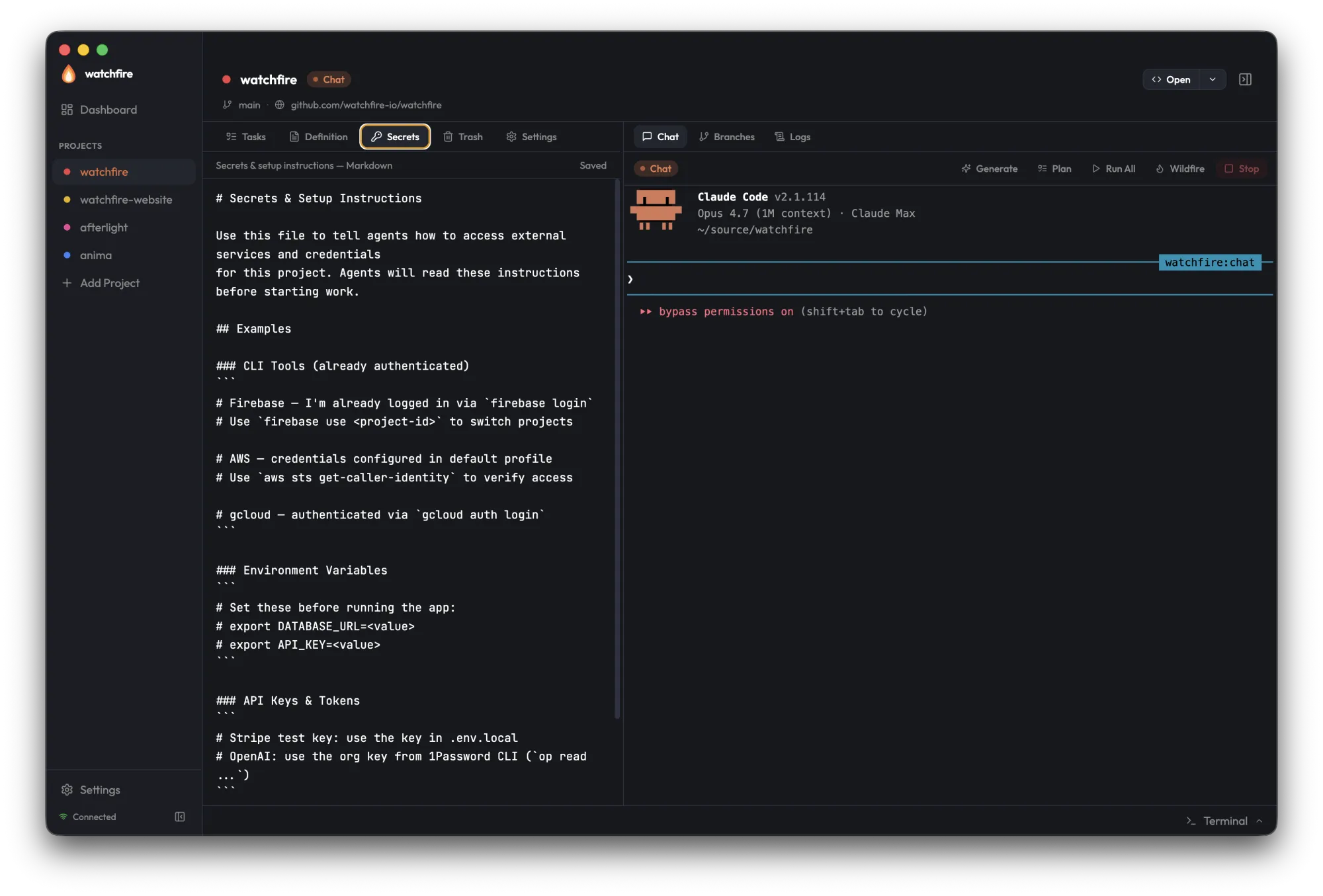
Per-project secrets passed into the sandbox at run time.
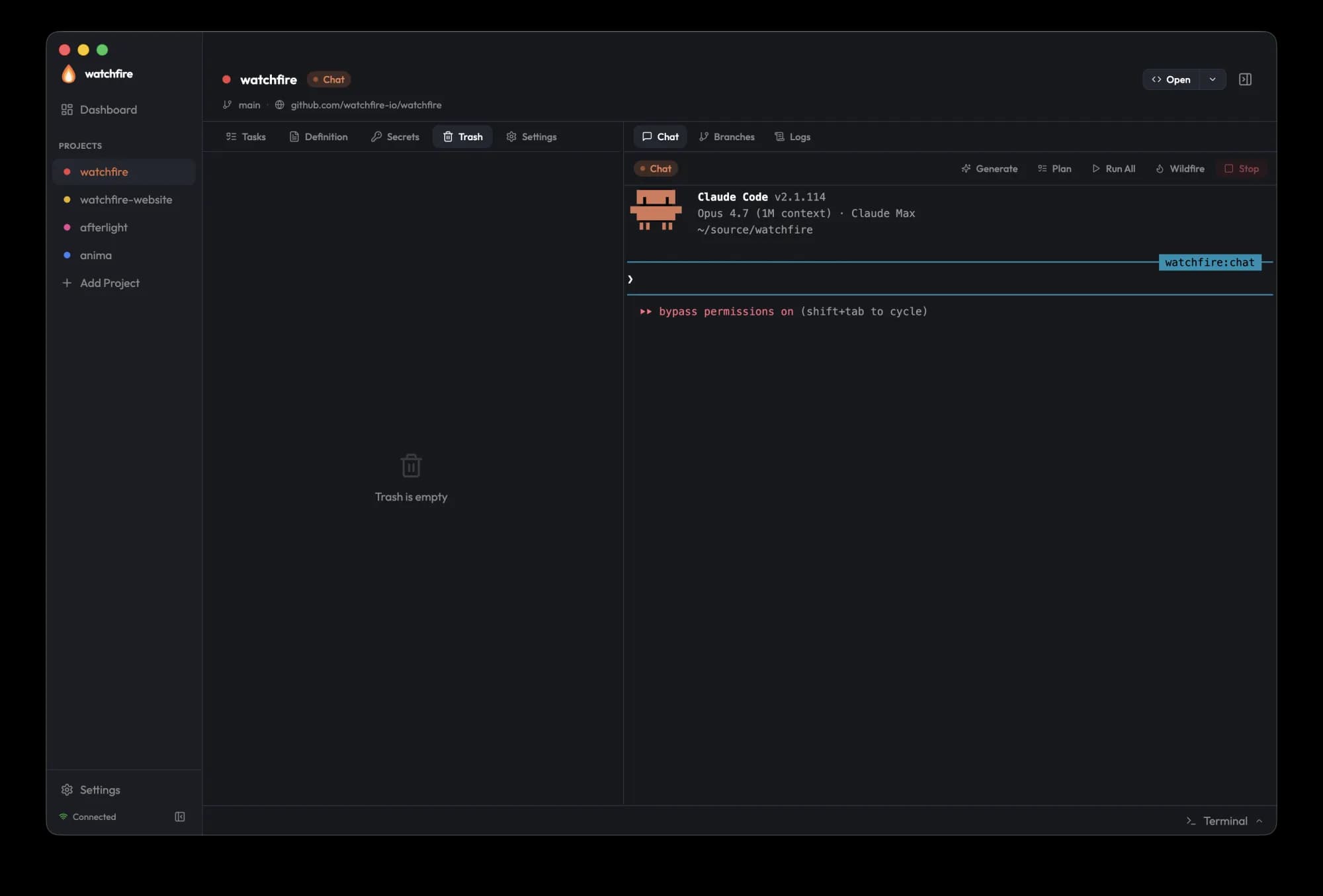
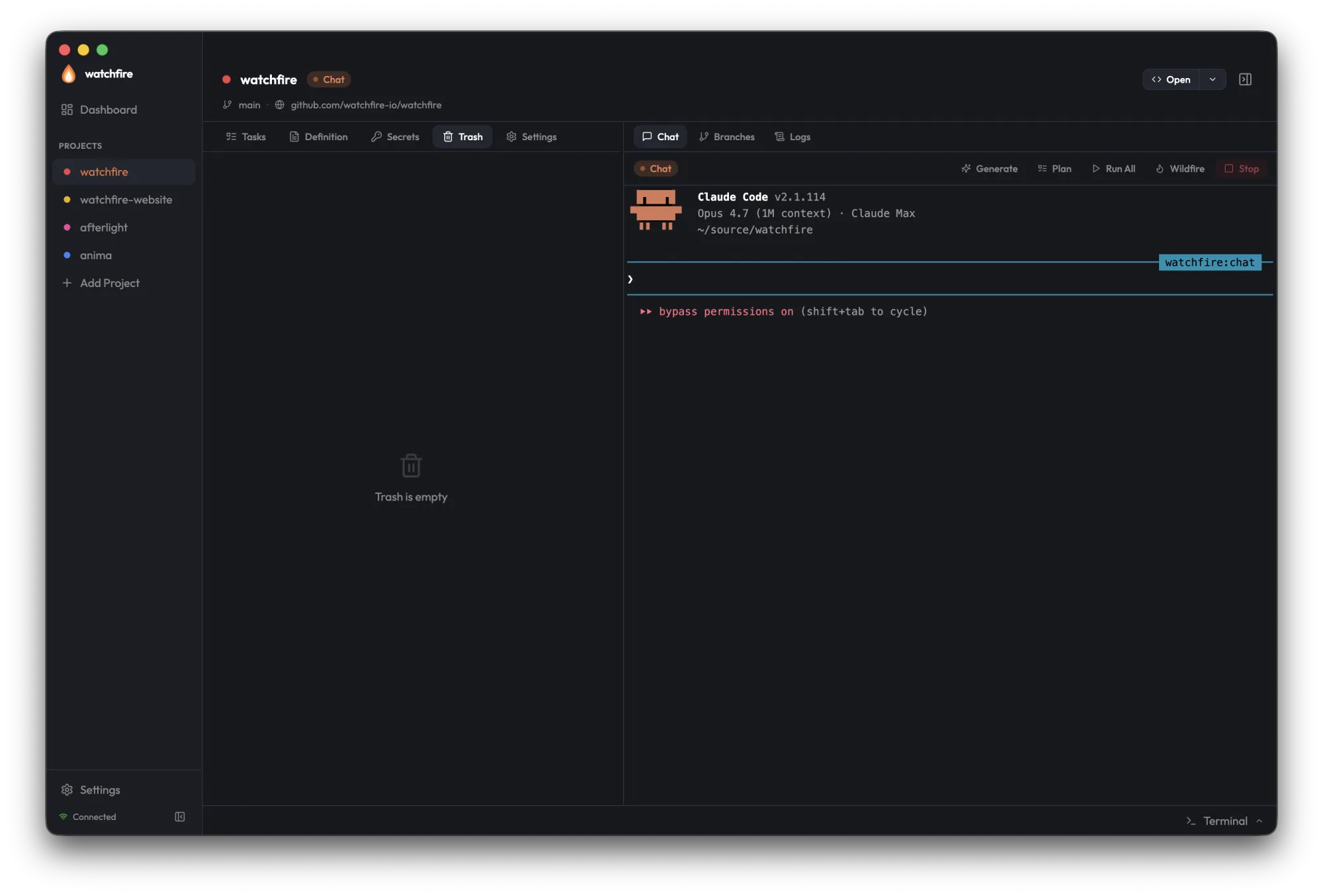
Recoverable trash for tasks the operator soft-deletes.
Numbers you can quote without fact-checking us.
Working on a piece? Reach out — we’ll fact-check it and turn around quotes in 24h when we can.
Watchfire is a small open-source project. One maintainer today, plus contributors on GitHub. Full story on the about page.
Creator and maintainer
Nuno started Watchfire because he wanted to run coding agents without babysitting a terminal. He writes most of the daemon, the CLI/TUI, the GUI, and — in a properly recursive way — uses Watchfire to build Watchfire.
If you’re writing about Watchfire, we’d love to read it. Tag us on Bluesky or GitHub Discussions — we keep a list of coverage.